Core Reflection: Inaction Is Not Neutral
In July 2025, the United Nations International Court of Justice (ICJ) affirms that climate Inaction is a legal liability that violates international law.
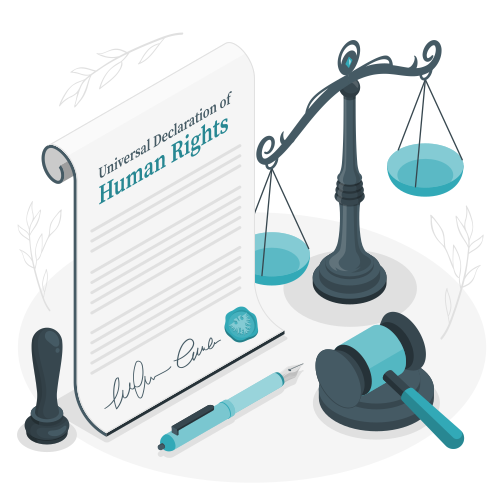
Under the Universal Human Rights, everyone deserves equal rights to a standard of living adequate for their health(Article 1 and Article 25). And it is our responsibility to protect the rights of others(Article 29). Human rights can never be taken away(Article 30), and the law should protect anyone whose rights have been violated(Article 8).
Climate inaction is not neutral. It’s a decision to allow the foreseeable irreversible climate disasters to negatively affect our future with massive human tragedies. In 2025 alone, 110 million people worldwide were affected by climate-related disasters, with 169 billion USD in losses.
To solve the dynamic, complex climate problem, we need stakeholder engagement with different responsibilities. And when global climate progress is slow due to the huge conflict of interests across different stakeholders and generations, we hope that each individual still has the possibility to plan and prepare for the future climate downside.
Not because climate change is important, but because our future lives are important.

AI-Powered Finance App for Long-term Climate Action
The success of the startup is co-created with our users. Optivide is a B2C social enterprise that supports people in solving the climate problem with financial confidence. Since we believe that if everyone, anywhere, could take climate action without worrying about their financial security, we could increase our success rate toward the net-zero goal. In our mobile app, our users can:
- Prepare Future Goals with Climate Simulation
- Search Climate Solutions Tailored to Your Needs
- Discuss Climate Practices with Global Community
The solution is built for personal climate resilience and responsible consumption. It is a scalable, personalized climate finance solution with science that our users are able to access anywhere, anytime, with minimal conflicts of interest. It removes conflicts of interests with fiduciary duties. Meanwhile, it aligns with SDGs 12, 13, and 17 and does not have geographic restrictions, gender preferences, age limitations, or any other preferences for people with different cultural backgrounds. Meanwhile, our solution is carefully designed to minimize the 3 structural problem layers:
Stakeholder Engagement: The Minimal Unit of Impact
The minimal unit of our global society is an individual. It’s the people who work, purchase, invest, vote, and advocate that shape our society's future.
To solve the dynamic, complex climate problem, we need stakeholder engagement with different responsibilities. Each individual must be responsible for their scope 1 and scope 2 GHG emissions to minimize the free-riding problem.
For stakeholders with more financial capabilities and unfair historical advantages, they are encouraged to disclose and voluntarily offset the scope 3 GHG emissions.


